Environmental Justice and Green Space
Unequal access to urban nature, and what spatial analysis can change about it
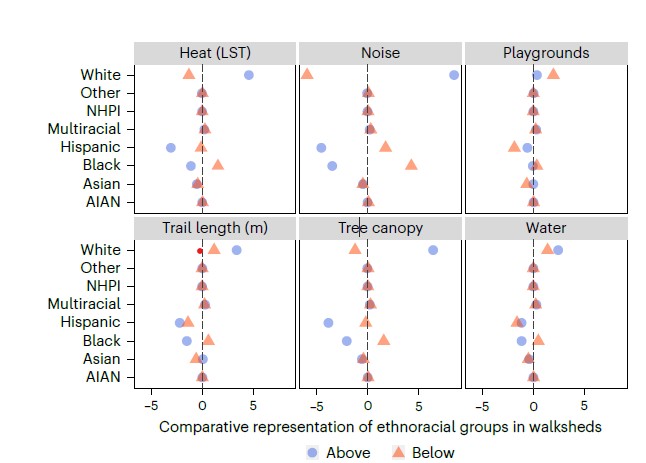
Why does access to nature in the city remain so unequal, and what can fine-scale spatial analysis change about it? Urban green spaces, parks, and environmental amenities are unevenly distributed within and across US cities, often along lines of race, income, and historical disinvestment. Through the SESYNC Parks for People working group and local work in Philadelphia, my lab studies these disparities and the spatial frameworks that could begin to close them. Equity is also the connective tissue across the rest of the program: it shapes the flooding, garden, and urban-form work in equal measure.
What we do
Two interconnected lines of work:
- National-scale analysis of amenity inequality. Through the SESYNC Parks for People working group, we move park research beyond a binary question of access toward what parks actually contain, how they are used, and how their quality is measured, at a national scale.
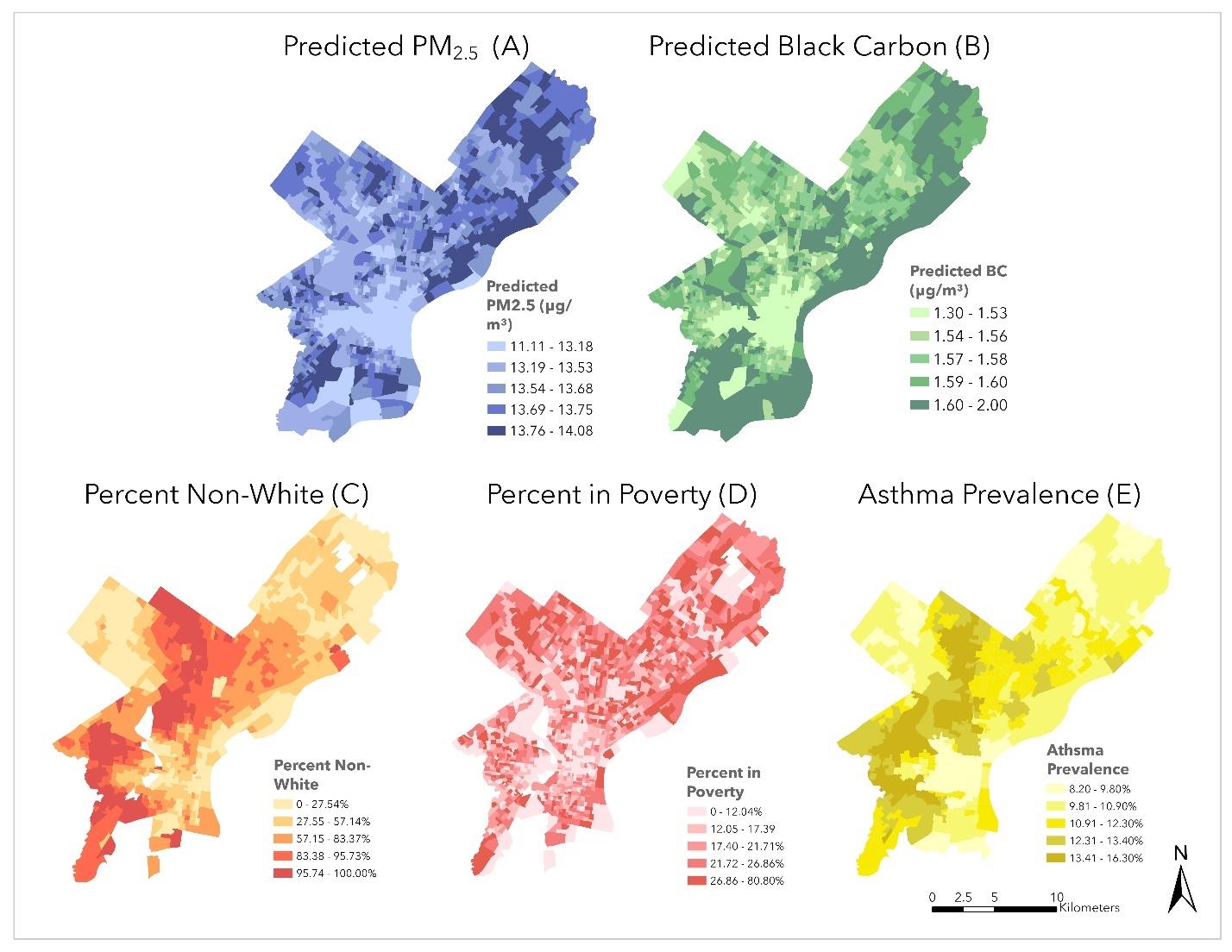
- Local empirical grounding. In Philadelphia, we map fine-scale environmental disparities, including particulate air pollution, onto historical patterns of redlining and disinvestment, connecting national narratives to local evidence.
Research vehicle
This theme is carried primarily through the SESYNC Parks for People working group, a multi-institution collaboration synthesizing data on park access, quality, and use across US cities, rather than through a single dedicated grant. The local Philadelphia work connects to the lab’s air pollution and garden research.
Featured publications
Selected papers; the full list is on the Publications page.
Winkler, R. L., Clark, J. A., Locke, D. H., Kremer, P., Aronson, M. F., Hoover, F.-A., Joo, H. E., La Rosa, D., Lee, K. J., Lerman, S. B., Pearsall, H., Vargo, T. L., Nilon, C. H., Lepczyk, C. A. (2024). Unequal access to social, environmental and health amenities in US urban parks. Nature Cities, 1(12), 861-870. DOI
A national analysis of unequal access to social, environmental, and health amenities in US urban parks, showing that disparities are not only about whether parks exist but about what they contain.
Lee, K., Aronson, M. F. J., Clark, J. A. G., Hoover, F.-A., Joo, H. E., Kremer, P., La Rosa, D., Larson, K. L., Lepczyk, C. A., Lerman, S. B., Locke, D. H., Nilon, C. H., Pearsall, H., Vargo, T. L. V. (2024). Limitations of existing park quality instruments and suggestions for future research. Landscape and Urban Planning, 249, 105127. DOI
Reviews park-quality measurement instruments and proposes directions for the next generation of tools.
Joo, H. E., Clark, J. A., Kremer, P., Aronson, M. F. (2024). Socio-environmental drivers of human-nature interactions in urban green spaces. Urban Ecosystems, 27(6), 2397-2413. DOI
Examines the socio-environmental drivers of how people actually interact with urban green spaces.
Scolio, M., Bohra, C., Kremer, P., Shakya, K. M. (2024). Spatial analysis of intra-urban air pollution disparities through an environmental justice lens: a case study of Philadelphia, PA. Atmosphere, 15(7), 755. DOI
Grounds the national narrative locally, mapping fine-scale air pollution disparities in Philadelphia onto histories of redlining and disinvestment.
Haase, D., Kabisch, S., Haase, A., Andersson, E., Banzhaf, E., Baró, F., et al. (2017). Greening cities, to be socially inclusive? About the alleged paradox of society and ecology in cities. Habitat International, 64, 41-48. DOI
Articulates the apparent paradox between urban greening and social inclusion that motivates much of this work.
Data and code
Winkler, R. L., Clark, J. A. G., Locke, D. H., Kremer, P., Aronson, M. F. J., Hoover, F.-A., Joo, H. E., La Rosa, D., Lee, K. J., Lerman, S. B., Pearsall, H., Vargo, T. L. V., Nilon, C. H., Lepczyk, C. A. (2025). Data and code for analyzing unequal access to social, environmental, and health amenities in United States urban parks. Forest Service Research Data Archive, USDA Forest Service. DOI
Partners and collaborators
The SESYNC Parks for People working group, including Christopher Lepczyk (Auburn), Myla Aronson (Rutgers), Hamil Pearsall (Temple), Dexter Locke (USDA Forest Service), John Clark, Richelle Winkler, Timothy Vargo, Susannah Lerman, Charles Nilon, Fushcia-Ann Hoover, Hyun Eun Joo, Daniele La Rosa, Kelli Larson, and Kyung Jin Lee.